
Our Blog
Our Blog
 Discover resources and insights from our experts

go to market strategy, mvp development, onboarding optimization, product launch failure, product management mistakes, product market fit, saas failure reasons, software product failure, software products fail after launch, startup product mistakes, user retention strategies
7 Reasons Most Software Products Fail After Launch (And How to Prevent It)
A lot of software products because the product was weak before launch, and the team only realizes it after launch. Launch is not usually the hard part, just the point where the market starts telling you the truth. The real problem behind software products fails Most failed software products have one or more of these issues: The product goes live. A few users sign up. Some click around. Then usage drops. The team starts blaming marketing, budget, or competition. Sometimes that is part of it. But in many cases, the product itself is the problem. What failure after launch actually looks like Failure is not always dramatic. Sometimes the app still exists. The website is still live. The team is still posting updates. But the product is weak in the ways that matter. Typical signs: A product can look alive and still be failing. Why most software products fail after launch 1. They solve a weak problem A product succeeds because it solves a problem people care enough to act on. A weak problem creates weak demand. You see this when a product is built around ideas like: That is not enough. Strong products solve painful, expensive, frequent, or urgent …

blockchain, cryptocurrency
Why Blockchain Technology Is Transforming Modern Businesses
Blockchain technology has moved beyond cryptocurrency. Businesses now use it to improve payment systems, strengthen audit trails, automate workflows, and share trusted records across multiple parties. At a basic level, blockchain is a distributed ledger secured with cryptography and maintained across a network instead of one central system. NIST describes blockchain as tamper-evident and tamper-resistant, which is a better and more accurate claim than calling it “unhackable.” For modern businesses, the value is practical. Blockchain can improve trust, traceability, transparency, and efficiency in systems where several organizations need to rely on the same record. IBM identifies those four areas as the main business benefits. What blockchain technology means for business Most businesses do not need blockchain for everything. They need it in places where traditional systems create friction. That usually happens when multiple parties have separate records, repeated reconciliation work, or slow approvals across a network. Blockchain can help by giving authorized participants access to the same ledger in near real time. That makes it useful for: This is why blockchain keeps showing up in discussions around enterprise payments, logistics, digital identity, and asset tokenization. NIST and IBM both frame its value around shared records, trust, and traceability rather than …
cybersecurity, engineering culture, software development, software project management
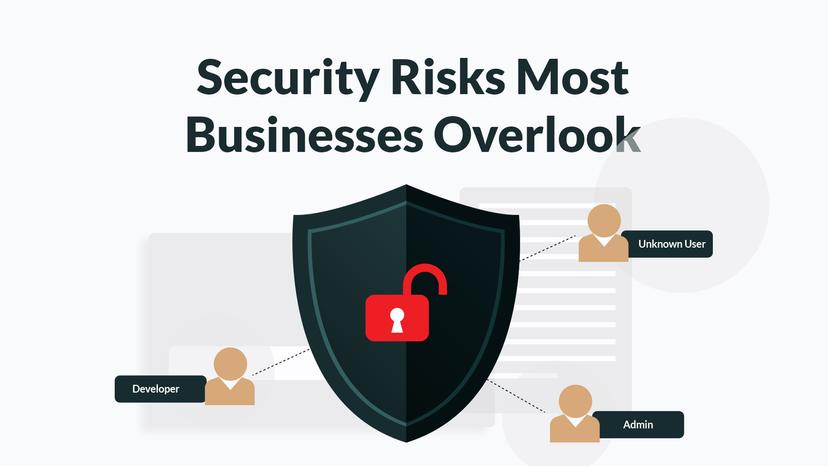
10 Dangerous Software Security Risks Businesses Overlook (And How to Fix Them Fast)
You can have the slickest app, the fastest checkout flow, and dashboards so pretty they deserve their own Netflix series… and still be one “oops” away from a breach. Most software security problems aren’t caused by movie-style hackers typing furiously in a dark hoodie cave. They’re caused by small, boring gaps in everyday software systems, gaps that quietly pile up until something snaps. Let’s talk about the common risks businesses overlook, why they matter, and what to do before your Monday morning turns into an incident-response marathon 1. Shadow IT: The Invisible Software Security Risk Shadow IT is when: Why Shadow IT Is Dangerous When IT doesn’t know a tool exists, they can’t: Shadow IT is one of the most common security risks businesses overlook in software systems. Quick fix checklist • Centralize SaaS access (use SSO {Single Sign-On} where possible) • Maintain an approved tools list (and keep it updated) • Monitor for new app signups and OAuth connections 2. Over-Permissioned Accounts (Everyone Is an Admin) In fast-moving companies, access gets handed out freely. Then nobody revisits it. Why It’s Risky If one account is compromised, excessive privileges turn it into a master key. This violates the principle of least privilege, a …

agile development, feature creep, mvp, mvp strategy, product development, saas development, scope creep, software architecture, software builds, software development, software development cost, software project planning, startup technology
5 Things Clients Get Wrong About Software Builds (And How to Avoid Expensive Mistakes)
Building software is a lot like renovating a house. Everyone starts with:“We just want something simple.” But halfway through, the plan suddenly includes a rooftop pool, glass walls, and a basement cinema. After working across fintech, healthcare, legal operations, and logistics platforms, we’ve seen the same breakdown patterns repeat whether the client is a funded startup or an enterprise division. So here’s a straight, practical breakdown of what clients often misunderstand about software builds and how to avoid expensive mistakes. 1. Scope Creep: “It’s Just One Small Change” Scope creep happens when new requirements get added after development has started without adjusting budget, time, or resources. It usually sounds harmless: Individually, each sounds minor, but architecturally, they’re not. What Clients Miss About Scope Changes When you add a feature mid-build, it often impacts: If a change affects roles, data structure, or tenancy, it is not cosmetic. It is architectural. Real Example (Multi-Branch Expansion) In a B2B operations platform we built, a client requested multi-branch support during development. That required: Impact: Not because the team was slow. Because the architecture changed. How To Avoid Scope Creep When scope changes, plans must change too. Adjust timeline, cost, and delivery expectations openly rather than …
async work, calm engineering, long-term software, nerdbug, predictable delivery, remote-first teams, software discipline
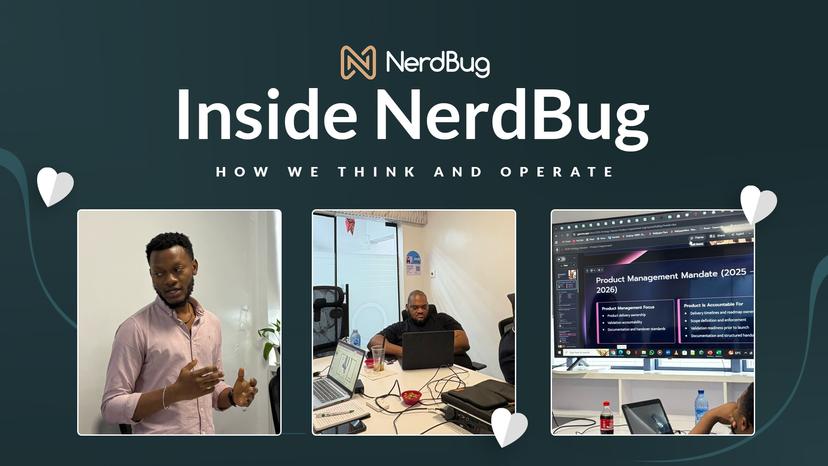
NerdBug: Building Software with Discipline
Most software problems arise early, with unclear goals, rushed decisions, assumptions no one wrote down, and pressure that masquerades as progress. By the time those issues surface, they’re expensive, frustrating, and hard to untangle. NerdBug exists to prevent that. We’re a software company, but we don’t lead with hype, velocity, or big promises about disruption. We believe the waysoftware is built matters just as much as what gets built. When the process is sound, outcomes stop feeling fragile. Projects become calmer. Decisions become clearer. And software starts to behave like a long-term asset instead of a constant source of stress. That’s the work we do. Why We Built NerdBug Many of the teams we work with come to us after something didn’t go well elsewhere. Deadlines slipped. Scope kept shifting. Communication felt vague or reactive. Progress was hard to see, and their confidence slowly eroded. In most cases, no one was trying to fail. The problem was misalignment. Speed was mistaken for momentum. Coding started before ideas were clear. Important decisions lived in people’s heads instead of shared systems. And when things broke, the response was to push harder rather than step back and fix the structure. We built NerdBug to operate differently. Not …
async communication, distributed teams, engineering culture, remote software development, remote team, remote work processes, software project management, team collaboration
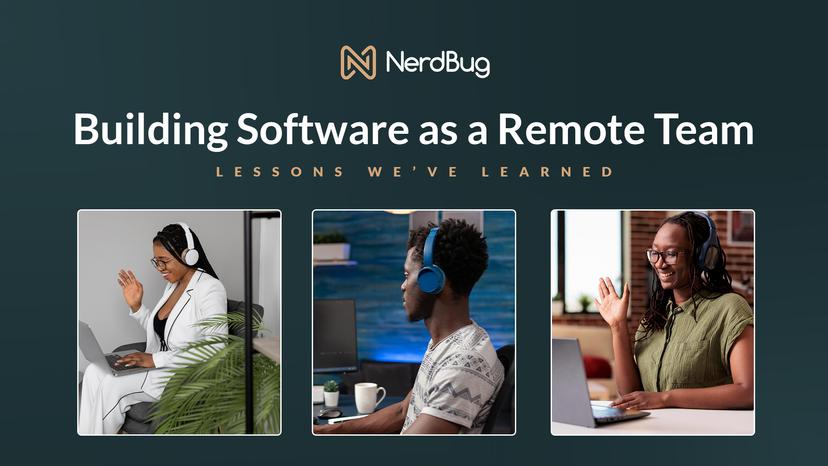
Building Software as a Remote Team: 6 Hard Lessons We’ve Learned
But first… Happy New Year! We hope you enjoyed your holidays as we did ours. Okay, let’s get into it. Remote work and remote teams Remote work isn’t new anymore. Sometimes, what’s been misunderstood is how good software gets built when the team is miles away from each other. Not in the same room, not even in the same time zone. At Nerdbug, we’ve been practicing ‘Remote Software Development’ long enough to move past the honeymoon phase and into something more useful and very important: Clarity. We’ve seen what scales, what quietly breaks our projects, and what sounds good…in theory. This article is a practical look at how we collaborate, make decisions, and deliver exquisite software without relying on proximity, constant meetings or ‘quick syncs’ that turn into blockers instead of acceleration. What Actually Works in Remote Software Dev Teams 1. Writing EVERYTHING Down At Nerdbug, if it’s not written, it doesn’t exist, no matter how many times it’s iterated verbally. Early on, we learned this the hard way. A feature shipped late, not because it was complex, but a key assumption lived only in someone’s memory from a call earlier that week. No doc. No ticket update. Just context …

automated testing, clean code, code quality, code reviews, coding best practices, continuous learning, design patterns, developer productivity, engineering culture, software development, software engineering best practices, version control
7 Software Engineering Best Practices for 2025 (That Every Developer Should Live By)
Why Software Engineering Best Practices Matter Now More Than Ever Software engineering in 2025 is about sustaining velocity without sacrificing sanity. Between microservices, AI-assisted dev tools, and hybrid teams, the complexity of building software has exploded. Without strong software engineering best practices, your project can go from “promising” to “please send help” faster than a failed deployment. That’s why these seven software engineering best practices are necessary tools to get you through your project without pulling your hair out. So, grab your coffee (or your third), and let’s dig into what separates chaotic codebases from the ones you’ll actually enjoy working on. 1. Write Clean, Readable Code (Because Future You Deserves It) Good code is like good writing, clear, concise, and written for others to understand. Messy code might “work,” but it’s the kind of work that haunts you six months later when you’re debugging at 3AM. Why Clean Code Matters Clean code is like a long-term investment in your sanity. When your code is readable, consistent, and purposeful, it reduces friction for everyone who touches it, from junior developers to senior reviewers. Think of it as writing a story your future self will actually enjoy reading. Writing clean code …

christmas 2025, coding culture, developers, gifts for developers, holiday gifts, productivity tools, remote work, software developers, team culture, tech gifts, workplace gifts
12 Great Holiday Gifts for Developers
*Even the One Who Never Unmutes on Zoho Phew, its finally the season and holiday gifts for developers can be surprisingly hard to choose. That magical time when “What should I get my coworker?” quietly becomes more stressful than deploying on a Friday. Whether your office bestie is a caffeine-fueled developer, a spreadsheet warrior, or that one mysterious teammate whose camera has been “broken” since 2021, we’ve got you covered with gifts that hit the perfect mix of fun, functional, and not weird. 1. Smart Mug (or Just a Really, Really Good One) No one deserves to sip lukewarm sadness at 9:17 AM. A self-heating mug like the Ember Mug 2 is a small miracle for the perpetually busy. Or go classic with a ceramic one that says “World’s Okayest Coder.” ✔️ Tech + Non-Tech Approved💡 Pro Tip: Pair it with a coffee sampler pack for bonus points. 2. Password Manager Subscription (No, Seriously) Sure, it doesn’t scream “holiday cheer,” but it screams digital safety and that’s close enough. Gift a 1-year subscription to 1Password or Bitwarden and add a cheeky card that says: “All I want for Christmas is for you to stop using ‘123456’ as your password.” ✔️ …

ai diagnostics, ai in healthcare, artificial intelligence in medicine, aws healthlake, cloud computing in healthcare, digital twins in healthcare, healthcare innovation, mazon healthcare ai, nvidia clara, nvidia in medicine, predictive healthcare
How Amazon and Nvidia Are Completely Transforming Healthcare with AI in 2025
Why Tech Giants Are Entering Healthcare If you thought Amazon’s biggest impact on your life was same-day delivery of vitamins and ergonomic desks, think again. The e-commerce and GPU powerhouses; Amazon and Nvidia are now venturing into healthcare AI. Why? Because healthcare is the next trillion-dollar frontier.The U.S. healthcare market is worth over $4.5 trillion, and it’s overflowing with data, the perfect nutrient for artificial intelligence. From Cloud to Clinic Tech companies thrive on data and scalability. Hospitals, on the other hand, are drowning in fragmented information. This makes healthcare the perfect sandbox for Amazon’s cloud empire and Nvidia’s AI supercomputers. Together, they’re creating what some analysts call “the most advanced digital health ecosystem ever conceived.” Amazon’s Prescription for the Future AWS HealthLake: The Heartbeat of Cloud Medicine Amazon Web Services (AWS) is now hosting your health.AWS HealthLake allows hospitals and research organizations to store, normalize, and analyze patient data in a HIPAA-compliant cloud environment. Think of it as a data warehouse for wellness, where machine learning can detect disease patterns across millions of patient records. HealthLake is already being used to: Alexa as a Health Assistant “Alexa, do I need to see a doctor?”It’s not science fiction anymore. Amazon’s voice …

ai in law, case management software, client portals, digital transformation in law, document automation, legal research tools, software development
10 Surprising Ways Smarter Legal Tech Makes Your Life Easier
Most of us don’t think about the law until we absolutely have to. Signing a lease, settling a dispute, filing a claim, chasing an unpaid invoice; legal matters usually show up at the most inconvenient moments. And when they do, they can feel like walking into a maze. That’s where legal tech steps in. Companies like us – NerdBug, with our app Firmly, are quietly reshaping how lawyers, clients, and even courts operate. By making lawyer’s work faster, they become better organized, and more accessible. When legal professionals are less saddled with paperwork and other inefficiencies, the clients will get better representation from their lawyers as a result of this. Here are 10 surprising places where legal tech can show up to make your day easier; even if you have never set foot in a courtroom. 1. Faster Contracts, Less Waiting Nobody likes waiting weeks for a simple contract draft. With AI-powered document automation, lawyers can generate agreements in minutes instead of days. AI-Powered Document Automation for Lawyers Firmly helps lawyers create airtight legal documents using customizable templates. That means less time chasing down paperwork and more time moving things forward, whether it’s buying property, starting a business, or signing …

ai optimization, digital twin, health
Run Like You’ve Got Two Hearts: The Digital Twin Heart That’s Watching Your Cardio (But in a Good Way)
Digital twin heart technology is about to change the way athletes train and recover and Tata Consultancy Services (TCS) is leading the charge TCS is taking marathon science to something even cooler and arguably sweatier: the first-ever digital heart of a long-distance runner. In partnership with two-time Olympian and Boston Marathon champ Des Linden, they’re blending elite athleticism with cutting-edge tech to build a virtual model of her heart. Yep, they’re literally crafting a digital version of Des’s cardio system. The goal? To give athletes a whole new way to measure health, performance, and recovery without needing to hook themselves up to hospital monitors or live inside a lab. Eventually, digital hearts like this could help doctors and coaches simulate stress, test treatments, or fine-tune training with sci-fi precision. For now, TCS is laying the groundwork, one (virtual) heartbeat at a time. Basically: they’re making Des Linden’s heart the most high-tech organ in sports. Sorry, Iron Man What Even Is a Digital Twin Heart? Imagine your heart had a nerdy twin who stayed home, ran simulations, tracked your every beat, and told you when to chill. That’s what TCS is doing: using data from sensors and MRIs to build digital …

personal productivity, repo, software mindset
Version Control in Life: How We Wish We Could Git Our Lives
Learn how to apply version control in life. Git commands like commit, merge, and revert become playful tools for productivity and calm,